7 Best Certifications for Automotive Diagnostic Equipment?

Time:2026-10-09 Author:Madeline
0%

Choosing diagnostic equipment for a modern workshop involves more than comparing screen size, software coverage, or advertised vehicle support. A scanner may look impressive on a service counter, yet its certification details reveal much more about safety, accuracy, and manufacturing quality. The practical question is simple: what certifications should automotive diagnostic equipment have?

This guide examines seven important certifications and quality standards linked to automotive diagnostic tools. These may include electrical safety approvals, electromagnetic compatibility testing, calibration competence, quality management, and regional market compliance. Each one addresses a different risk. For example, accurate voltage readings matter when technicians test a vehicle battery, while electromagnetic compatibility helps prevent interference with nearby workshop equipment. ISO-related standards can also indicate controlled production and documented testing processes.

Real workshop conditions are rarely perfect. Dust enters connectors. Cables get bent. Software updates sometimes create confusion. A certificate does not guarantee flawless performance, and this point deserves honest attention. Buyers should verify the certificate number, issuing body, product model, and validity date. They should also check whether the certification applies to the complete tool or only one component. Requirements can differ between countries and equipment types. That makes generic claims unreliable.

The following overview focuses on practical value, technical credibility, and purchasing confidence. It considers what each certification means during everyday diagnosis, from reading fault codes in a busy repair bay to measuring sensitive electronic systems. Some standards may be essential, while others provide stronger evidence of manufacturing discipline. Understanding that difference helps workshops choose equipment that is safer, more dependable, and easier to justify during audits or technical reviews.
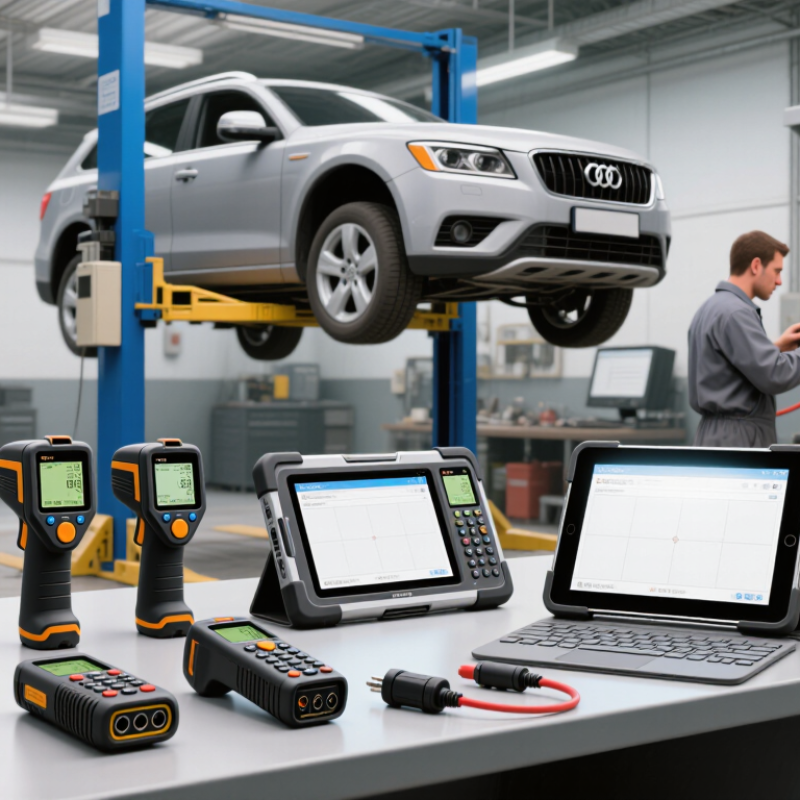
7 Best Certifications for Automotive Diagnostic Equipment?

What to Know Before Choosing an Automotive Diagnostic Certification

Choosing an automotive diagnostic certification requires more than counting certificates on a résumé. The U.S. Bureau of Labor Statistics reports about 67,000 annual openings for automotive service technicians and mechanics. Meanwhile, the TechForce Foundation’s 2023 Transportation Technician Supply and Demand Report identified a need for more than one million new technicians between 2022 and 2026. These figures show strong demand, but demand does not guarantee quality training.

Look for assessments that test live fault diagnosis, wiring measurements, network communication, and safety procedures. A written exam alone may not reveal whether you can isolate a voltage drop beside a noisy workshop lift. Check whether the program covers electric vehicles, advanced driver-assistance systems, cybersecurity awareness, and software updates. These areas change quickly. Ask how often the course content is reviewed. Also verify renewal rules, practical testing, instructor experience, and recognition among local repair employers. Some programs advertise advanced content but provide little access to real diagnostic equipment. That is a warning sign.

Cost should be compared with training hours, not just the enrollment fee. A cheaper certificate may require separate practice sessions later. A more expensive course may still lack depth. The uncomfortable truth is that no certification replaces careful testing habits. Choosing only by reputation can also mislead you. Review the syllabus, sample assessment, equipment list, and graduate outcomes before paying. A strong choice should improve your hands, eyes, and reasoning—not only your paperwork.

ASE Certifications for General Automotive Diagnostic Skills

For technicians working with automotive diagnostic equipment, ASE credentials are strongest when they match real testing tasks. Seven useful options are A1 Engine Repair, A4 Suspension and Steering, A5 Brakes, A6 Electrical/Electronic Systems, A7 Heating and Air Conditioning, A8 Engine Performance, and G1 Maintenance and Light Repair. A6 and A8 deserve special attention. They develop skills in reading scan data, checking circuit voltage, testing grounds, and confirming sensor signals.

A scan tool is not a diagnosis. It is evidence.

Technicians preparing for A6 should practice a repeatable fault check. Verify battery voltage, inspect connectors, measure voltage drop, and compare live data with specifications. A8 preparation adds fuel, ignition, emissions, and air-induction diagnosis. On a training vehicle, a weak ground may trigger several warning lights. Replacing a sensor too early can hide the real fault.

Measure it twice. Do not guess.

A1 supports mechanical diagnosis, while A4 and A5 help explain handling or braking complaints that electronic tools cannot solve. A7 builds confidence with pressure, temperature, and electrical tests. Certification does not replace service information or documented measurements. Candidates should confirm current ASE eligibility, testing, and recertification rules through official sources. Recording symptoms, test results, repair decisions, and final verification improves reliability. Even skilled technicians can rush. That weakness deserves attention. Reliable diagnosis often comes from repeating a simple test, not guessing faster.

OEM Certifications for Brand-Specific Diagnostic Equipment

OEM certification matters when diagnostic equipment must communicate with brand-specific vehicle systems. It proves more than basic scanner operation. A practical seven-part path includes manufacturer service training, diagnostic software certification, electrical testing, high-voltage systems, ADAS calibration, emissions diagnosis, and vehicle cybersecurity. Each track should match the technician’s daily work. Not every certificate carries equal weight. Check the issuing authority, renewal rules, and practical assessment requirements.

In workshop practice, certified technicians read live data, compare oscilloscope patterns, and verify fault codes before replacing parts. I once treated a stored code as a failed component. The wiring inspection proved otherwise. The lesson was uncomfortable. OEM programs should teach guided diagnostics, software updates, repair procedures, and post-repair verification. For ADAS work, training should include target placement, floor measurements, and calibration records. For high-voltage systems, safe isolation procedures must be assessed in person.

Before paying for a course, ask whether the certificate applies to the equipment and vehicle systems you actually service. Some programs cover only classroom theory. That sounds impressive, but it may not build workshop confidence. A credible course includes supervised testing, current technical documents, and access to authorized software procedures. Look for clear examination standards. Tools change quickly. Certification should be renewed when systems, software, or safety requirements change. Personally, I would value documented competence over a decorative certificate.

Specialty Certifications for EV, Hybrid, and ADAS Diagnostics

7 Best Certifications for Automotive Diagnostic Equipment?

Specialty Certifications for EV, Hybrid, and ADAS Diagnostics

Modern diagnostic work demands more than reading fault codes. The strongest certification path combines safety, measurement skills, and vehicle-specific judgment. An electric vehicle high-voltage safety certification should cover isolation procedures, insulated tools, battery shutdown, and emergency response. A hybrid powertrain certification adds knowledge of regenerative braking, inverter operation, and engine-motor coordination. Battery diagnostics training is equally valuable, especially for testing cell balance, state of charge, and thermal behavior.

ADAS calibration certification teaches technicians to align cameras, radar sensors, and steering-angle data. It should include road-test verification and strict documentation. An automotive oscilloscope certification helps identify waveform problems that scanners often miss. Network diagnostics training develops practical skills with communication faults, wiring resistance, and module data. Thermal management certification can reveal coolant flow, heat-pump, and battery-temperature faults.

Hands-on assessment matters.

In workshop training, accurate measurements often matter more than fast results. A technician may face a clean scan report while a damaged connector causes intermittent faults. That situation rewards patience, not guesswork. Choose programs with supervised practice, current technical references, and transparent renewal requirements. Certification titles can sound impressive, but their assessment methods vary widely. I would also question courses that promise complete confidence after one short session. Even experienced technicians can misread insulation tests or overlook calibration targets. Keep service records, test conditions, and equipment checks together. Those details make diagnostic decisions easier to review and defend.

How to Compare Certification Costs, Requirements, and Career Benefits

7 Best Certifications for Automotive Diagnostic Equipment?

The best path covers seven areas: electrical systems, engine performance, hybrid vehicles, battery systems, advanced driver-assistance calibration, oscilloscope testing, and diagnostic data analysis. Compare the full cost, not only the exam fee. Entry-level assessments often cost $50–$150, while advanced modules may reach $150–$400. Training, practice equipment, travel, and renewal fees can double that figure. Requirements also differ. Some programs accept beginners, but advanced credentials may require documented work hours, prior certificates, or supervised practical testing.

Career benefits should match local demand. The U.S. Bureau of Labor Statistics reported a $47,770 median annual wage for automotive service technicians in May 2023. It also projects 2% employment growth from 2023 to 2033. Meanwhile, the International Energy Agency reported more than 14 million electric car sales worldwide in 2023. That shift increases demand for safe, data-based diagnosis. Still, a certificate alone does not prove competence. Employers often value clean test procedures, accurate repair notes, and fewer repeat faults more than impressive titles.

Tips: Build a comparison sheet with five columns: fee, prerequisites, hands-on hours, renewal rules, and measurable job value. Ask whether the assessment uses live fault tracing. A cheap certificate can become expensive if it teaches only theory. I would also review recent job postings before paying. My own comparison would favor one practical credential over several paper-only courses.

7 Best Certifications for Automotive Diagnostic Equipment

This comparison uses published U.S. computer-based testing fees for common automotive diagnostic certification tracks. Standard-level exams are shown at approximately $53 per test, while advanced-level exams are approximately $106 per test. A separate registration fee, taxes, training, and retesting may apply.

All seven tracks generally require practical automotive knowledge, and professional recertification is commonly required on a five-year cycle. Electrical, engine-performance, diesel, and hybrid/EV credentials are especially useful when working with scan tools, digital multimeters, oscilloscopes, and high-voltage diagnostic equipment.

FAQS

What should an automotive diagnostic certification assess?

It should test live fault diagnosis, wiring measurements, network communication, and safety procedures. Written questions alone are not enough. Hands-on work matters.

Which general diagnostic skills deserve the most attention?

Electrical and engine-performance skills are especially valuable. Practice scan data, voltage drops, ground testing, sensor signals, fuel, ignition, and air-induction checks.

Is a scan tool enough for accurate diagnosis?

No. A scan tool provides evidence, not a complete diagnosis. Confirm codes with measurements, wiring checks, specifications, and final verification.

What should electric vehicle and hybrid training include?

Look for isolation procedures, insulated tools, battery shutdown, emergency response, and thermal safety. Hybrid training should cover regenerative braking and inverter operation.

What should an ADAS calibration course teach?

It should cover camera, radar, and steering-angle alignment. Road-test verification and careful documentation should also be required. Targets must be positioned accurately.

Why is an oscilloscope useful in diagnostic training?

It can reveal waveform problems that scan data may hide. Use it for sensor signals, communication faults, and intermittent electrical problems.

How should I compare certification costs?

Compare total cost with training hours, equipment access, practice sessions, and assessment depth. A cheap course may create later expenses.

How can I judge whether a certification program is credible?

Review its syllabus, sample assessment, equipment list, instructor experience, renewal rules, and graduate outcomes. Ask local repair employers about recognition.

Can certification replace careful testing habits?

No certification replaces disciplined testing. Record symptoms, measurements, test conditions, repairs, and final results. Even skilled technicians can rush. That weakness deserves attention.

Conclusion

Choosing the right automotive diagnostic certification starts with understanding your career goals, current skills, and the equipment you plan to use. General automotive certifications can validate knowledge of engine systems, electrical diagnostics, scan tools, and repair procedures. Manufacturer-specific training may be valuable for technicians who work with brand-specific diagnostic equipment, while specialty credentials can build expertise in electric and hybrid vehicles, battery systems, high-voltage safety, and advanced driver-assistance systems (ADAS). These certifications help demonstrate technical competence and support accurate, efficient diagnostics.

When asking, “what certifications should automotive diagnostic equipment have,” it is important to distinguish between certifications for technicians and compliance or quality standards for the equipment itself. Compare each program’s prerequisites, examination format, renewal requirements, training time, and total cost. Also consider whether the credential improves employability, supports access to advanced tools, or prepares you for emerging vehicle technologies. A well-chosen certification should match your professional direction and provide practical value in real workshop conditions.

Madeline

Madeline

Madeline is a dedicated marketing professional with a wealth of expertise in our company's core offerings. With a keen understanding of the industry, she brings a unique perspective to her role, consistently delivering high-quality content that highlights the superior aspects of our products. As......