Choosing smart diagnostics is becoming a practical decision for modern automotive workshops. Vehicles now contain more electronic control units, connected functions, and software-dependent systems. S&P Global Mobility reported that the average age of U.S. light vehicles reached 12.6 years in 2024. Older vehicles still require service, while newer models demand deeper electronic testing. This combination increases diagnostic pressure.
So, why are automotive workshops adopting smart diagnostics? The answer involves speed, accuracy, and changing vehicle technology. The International Energy Agency’s Global EV Outlook 2024 expected global electric car sales to exceed 17 million units during 2024. Electric vehicles require different testing methods, especially for battery systems, isolation faults, thermal management, and high-voltage components. A technician may need live data, guided testing, and secure software access before replacing one expensive part.
The right system should support the workshop’s actual workload. Look for broad vehicle coverage, verified software updates, clear fault-code explanations, and practical reporting tools. Test the device on difficult vehicles, not only familiar ones. Check whether technicians can view wiring diagrams beside live sensor values. That detail matters.
No tool is perfect. A premium scanner cannot replace trained judgment or careful physical inspection. Some platforms also promise wider coverage than they consistently deliver. Workshop owners should compare independent reviews, manufacturer documentation, training quality, and total ownership cost. Reports from Deloitte’s 2024 Global Automotive Consumer Study also underline rising expectations for connected vehicle experiences. Diagnostic capability must therefore develop continuously. Choosing only the cheapest device may create slower repairs, repeated testing, and dissatisfied customers.
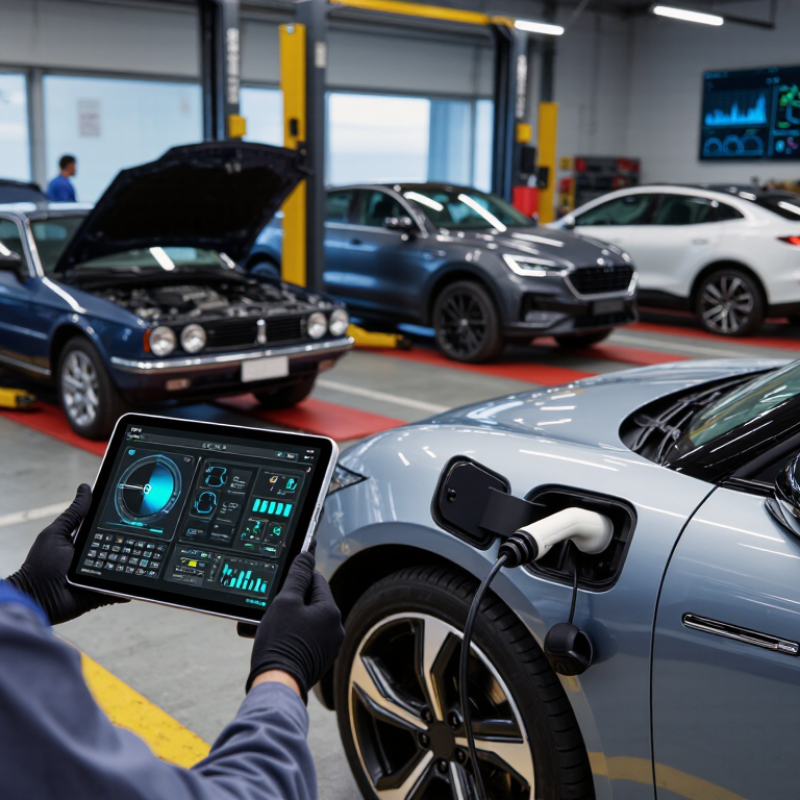
How to Choose Smart Diagnostics for Automotive Workshops?
Smart diagnostics mean more than reading fault codes. They connect vehicle data, guided tests, repair history, and technician judgment. The need is growing. The International Energy Agency reported nearly 14 million electric cars sold worldwide in 2023, representing about 18% of new-car sales. Workshops now face high-voltage systems, software faults, advanced driver-assistance sensors, and older mechanical platforms together. In Europe, the ACEA Vehicles on European Roads 2024 report placed the average passenger-car age at about 12.5 years. A useful diagnostic platform must therefore support mixed technology, not only new vehicles.
Look beyond screen size. Check coverage, live data quality, wiring diagrams, guided procedures, battery safety functions, and update transparency. A scan is not a diagnosis. Technicians should confirm codes with symptoms, measured values, and a physical inspection. I have seen a dashboard warning disappear after clearing memory, while the underlying wiring fault remained. That mistake wastes time and weakens customer trust. Choose tools that record test results clearly and create a traceable repair history.
Tips: Test the system on three vehicles before buying. Compare connection stability in a noisy workshop. Ask whether updates explain added coverage and known limits. Train technicians with real fault cases, not only demonstrations. Review false leads monthly. Smart tools still need careful people.
What Smart Diagnostics Mean in Modern Automotive Workshops
A smart diagnostic process combines visual inspection, fault-code scanning, live-data analysis, guided testing, and repair verification. These practical planning benchmarks show how workshop time is commonly distributed across a complete diagnostic workflow; actual results vary by vehicle, fault complexity, and technician experience.
A smart diagnostic system starts with your workload, not its feature list. Review the vehicles entering your bays each week. Record model years, fuel types, electronic systems, fault codes, and failed repair attempts. Measure the gaps.
S&P Global Mobility reported that the average age of U.S. light vehicles reached 12.6 years in 2024. The European Automobile Manufacturers’ Association reported an average passenger-car age of about 12.5 years in Europe. Your workshop may therefore need coverage for both older mechanical systems and newer networked electronics. A tool that reads codes but cannot support guided testing may waste valuable bay time. That matters when technicians must check braking systems, battery management, cameras, and communication networks.
Assess your diagnostic requirements against real workflow. Can technicians identify faults quickly? Can they access reliable repair information? Does the system support calibration procedures and clear test results? Training is equally important. A powerful interface becomes expensive equipment when staff rarely trust its readings. Do not guess.
Track three practical measures for ninety days: diagnostic time, repeat repairs, and unsupported vehicles. Compare these results with subscription and training costs. The 2024 Automotive Aftermarket Status Report from the Auto Care Association highlights the aftermarket’s continuing growth and technical complexity, making information access increasingly important. Still, data alone cannot replace judgment. Your initial assessment may overlook wiring faults, technician confidence, or workshop space. Review it with experienced technicians before choosing a system.
How to Choose Smart Diagnostics for Automotive Workshops?
A smart diagnostic tool should do more than read and clear fault codes. In a busy workshop, live data is often more valuable than a stored warning. Technicians need clear sensor readings, freeze-frame details, and graphing functions. These features help reveal faults that disappear during a short inspection. Bi-directional controls are also important. They allow technicians to test cooling fans, fuel pumps, valves, and actuators safely. This can reduce unnecessary parts replacement.
Vehicle system coverage matters just as much. Engine, transmission, braking, steering, and airbag systems remain essential. Modern vehicles also require battery management, driver assistance, body control, and communication network diagnostics. ADAS calibration support deserves careful attention after alignment or collision repairs. The tool should show required conditions, measurements, and calibration status. Accurate gateway access is useful too, but security procedures must follow lawful workshop requirements.
Test before trust. A tool may list many systems but provide shallow data. I would compare its results with known-good measurements and approved service procedures. Clear fault descriptions matter. So does stable communication.
I still find missed wiring faults frustrating. Better topology views and voltage testing guidance could prevent them. Technicians should record test results, not rely on memory. Regular software updates, repair information, and responsive technical support improve reliability over time. A practical interface also matters when a vehicle is waiting on the lift.
Choosing smart diagnostics starts with compatibility, not screen size or marketing claims. A useful tool should support the vehicle makes, models, systems, and communication protocols your workshop handles daily. Check software coverage carefully. A device may read engine faults but miss airbag, transmission, or advanced driver-assistance systems. That gap can delay repairs.
Accuracy needs practical testing. Compare live data with known workshop measurements, such as battery voltage, sensor resistance, and fuel pressure. Reliable equipment should show clear fault descriptions, freeze-frame data, and stable readings. In my workshop experience, one inconsistent reading can lead to an unnecessary part replacement. Ask about update frequency, diagnostic databases, and technical documentation. Independent test reports help, but real repair results matter more.
Ease of use affects every job. Look for a logical menu, quick vehicle identification, readable graphs, and guided testing steps. Technicians should reach useful data without repeated backtracking. Simple matters. Wireless connections can save time, but weak signals create frustration near metal lifts or crowded bays. Training support also matters, especially for less experienced technicians. I still find that some advanced tools offer too many functions and explain too little. A short trial with several technicians may reveal problems that a product demonstration hides. Compare the tool’s speed, coverage, and clarity against the actual vehicles entering your workshop.
A smart diagnostic tool must fit the workshop’s daily rhythm, not only its feature list. In practice, technicians notice costs after the purchase. The initial price is only one line. Check subscription fees, update charges, adapters, calibration equipment, and replacement policies. Ask for a three-year cost estimate. Include training time and lost work hours. A cheap device can become expensive when support is slow. That happens more often than brochures admit.
Updates should match vehicle coverage and workshop demand. Ask how often software is released and how quickly critical faults are corrected. Reliable suppliers explain update history, system requirements, and offline options clearly. Test the update process on a spare workstation before using it during busy service hours. A failed installation can leave a vehicle waiting on the lift. I would also check whether older hardware remains supported. This point is easy to miss.
Training should use realistic cases, not polished demonstrations alone. Request practical sessions covering fault tracing, live data, wiring checks, and report writing. Good instruction shows uncertainty and teaches safe verification. A certificate has limited value if technicians cannot interpret readings. Technical support should provide clear response times, skilled personnel, and documented escalation paths. Call before buying and describe a difficult fault. The quality of that conversation is useful evidence. Still, no tool removes human judgment. Some decisions remain imperfect, especially when symptoms overlap. Record those lessons and review them with the team.
Match the tool with the vehicles entering your workshop every week. Check supported makes, models, systems, and communication protocols. Confirm coverage for engines, transmissions, airbags, and driver-assistance systems. Engine access alone may be insufficient. Record missing functions before purchase.
Compare tool readings with trusted workshop measurements. Check battery voltage, sensor resistance, and fuel pressure. Look for stable readings, clear fault descriptions, and freeze-frame data. One wrong value can cause an unnecessary part replacement. Real repair results matter most.
Choose logical menus and quick vehicle identification. Readable graphs should show changes clearly. Guided tests can help technicians follow each step. Useful data should appear without repeated backtracking. Simple matters.
Wireless communication can save time around vehicle lifts. However, metal structures and crowded bays may weaken signals. Test the connection in several workshop areas. A short delay becomes frustrating during busy service hours. This detail is easy to underestimate.
Calculate more than the purchase price. Include subscriptions, software updates, adapters, calibration equipment, and replacement policies. Add training time and lost working hours. A three-year estimate gives a clearer picture. Cheap can become expensive.
Ask about release frequency, correction speed, system requirements, and offline options. Review the update history before buying. Test installation on a spare workstation. A failed update can leave a vehicle waiting on the lift. Older hardware may lose support.
Request sessions using realistic fault cases. Training should cover fault tracing, live data, wiring checks, and report writing. Good instruction explains safe verification and uncertainty. A certificate alone proves little. Technicians still need judgment.
Contact support before purchasing and describe a difficult fault. Ask about response times, skilled personnel, and escalation procedures. Clear answers provide useful evidence. Some symptoms overlap, so no tool removes human judgment. I may still miss something.
Smart diagnostics are transforming modern automotive workshops by combining advanced scanning, guided testing, real-time data, and connected service information in one efficient process. But why are automotive workshops adopting smart diagnostics? They need faster fault identification, greater accuracy, and better support for increasingly complex vehicle systems, including engine management, safety features, hybrid or electric powertrains, networking, and driver-assistance technologies. The right solution should match the workshop’s vehicle types, workload, technician skills, and future development plans.
When comparing diagnostic equipment, workshops should assess vehicle coverage, software compatibility, measurement accuracy, operating simplicity, and the quality of repair guidance. Cost should also be viewed beyond the initial purchase, taking into account update plans, training requirements, warranty coverage, and technical support. A practical choice is one that reduces unnecessary testing, helps technicians make confident decisions, integrates smoothly into daily operations, and continues to deliver value as vehicle technology evolves.
Kore Auto