China’s automotive service landscape is changing alongside its rapidly developing electric-vehicle and connected-car markets. A technician may now inspect a battery-management alert, compare sensor readings, and check software fault codes before replacing a part. The work is becoming more data-driven. It is not becoming simple.
So, what is the future of automotive diagnostic technology in China? The answer will depend on how well diagnostic tools connect vehicle data, workshop expertise, and reliable repair information. Cloud platforms and artificial intelligence may help identify patterns across large numbers of vehicles. But a useful warning still needs a skilled person to verify it. A code is a clue, not a diagnosis.
China’s mix of domestic brands, imported models, electric drivetrains, and conventional vehicles creates both opportunity and complexity. Independent repair shops may need affordable, regularly updated tools, while manufacturers must support accurate diagnostics across changing vehicle software. Data quality, cybersecurity, privacy, and technician training will matter as much as processing speed. These needs can differ between large cities and smaller service markets. Progress may be uneven.
That deserves attention. More automation could shorten troubleshooting, but poorly explained recommendations may encourage unnecessary part replacement. The most credible future is not a fully hands-off workshop. It is a system that shows its evidence, flags uncertainty, and helps technicians make safer, better-informed decisions. China’s next diagnostic advances will be judged not only by what they can detect, but by whether repairs become more accurate, transparent, and accessible.
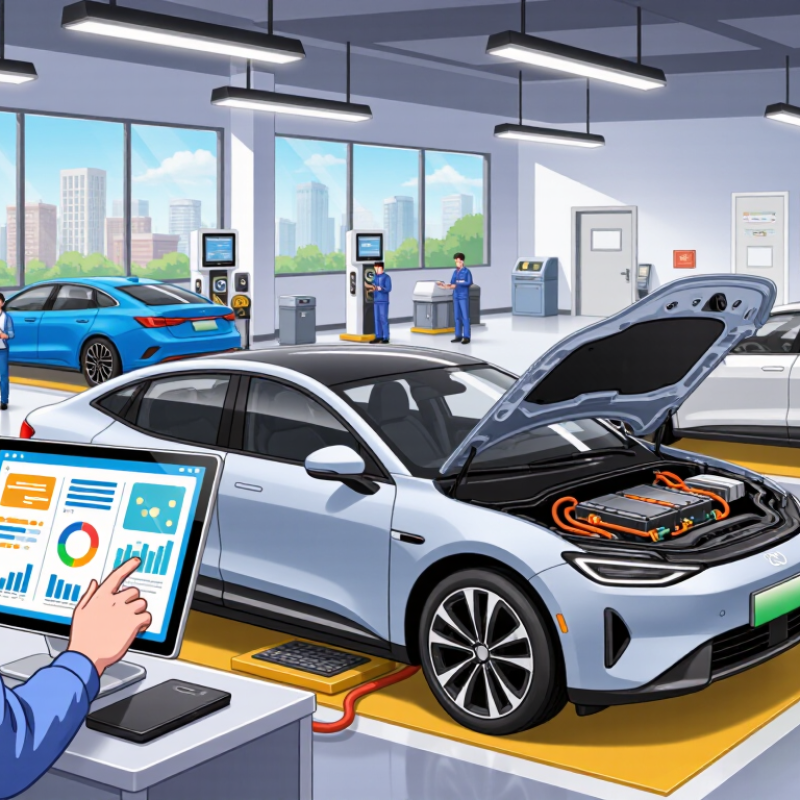
Automotive diagnostics in China reflects a vehicle market changing at unusual speed. Workshops may see older petrol cars, hybrid vehicles, and battery-electric models in the same week. Their diagnostic needs differ. A fault code can point toward a circuit, but it rarely explains the whole problem.
In independent repair shops, technicians often combine scan-tool readings with practical checks. They may inspect a connector, compare live sensor data, and test a battery before replacing parts. Simple steps still matter. For electric vehicles, safe procedures and knowledge of high-voltage systems are essential. Driver-assistance features add another layer: cameras and radar sensors may need calibration after repairs or even a windshield replacement.
China’s large digital ecosystem also shapes diagnostics. Connected vehicles can produce substantial data, while remote services may help identify faults earlier. Access and interpretation are not always straightforward, however. Software versions, vehicle designs, and workshop capabilities vary, so one diagnostic method will not fit every case. It is easy to overstate how quickly connected tools can solve problems; technicians still need sound training and clear repair information. As vehicle technology evolves, practical testing remains just as important as data.
| Dimension | China baseline / verified data | Implication for diagnostics | Likely direction | Reference |
|---|---|---|---|---|
| Vehicle fleet scale | At the end of 2023, China had 336 million automobiles in use. | A large vehicle parc supports sustained demand for fault diagnosis, maintenance, inspection, and repair across vehicles of different ages. | Demand is likely to remain broad-based, spanning both conventional and electrified vehicles. | Ministry of Public Security of China, 2023 motor vehicle and driver statistics. |
| New-energy vehicle adoption | China had 20.41 million new-energy vehicles in use at the end of 2023, according to the Ministry of Public Security. | Diagnostic work increasingly needs to cover high-voltage systems, battery management, electric drive, and charging-related faults, alongside conventional systems. | Multisystem diagnostics and technician skills for electrified powertrains are likely to become more important. | Ministry of Public Security of China, 2023 motor vehicle and driver statistics. |
| New-vehicle sales mix | In 2024, China recorded 12.866 million new-energy vehicle sales out of 31.436 million total vehicle sales—about 40.9% by calculation. | The growing share of electrified vehicles changes the mix of faults, service procedures, and diagnostic equipment required by repair facilities. | Tools and service workflows are likely to adapt further to electric and plug-in hybrid vehicle systems. | China Association of Automobile Manufacturers, 2024 industry statistics; share calculated from reported sales. |
| Emissions-related onboard diagnostics | China’s China VI light-duty vehicle emissions standard, GB 18352.6-2016, includes onboard diagnostic requirements. | Emissions-related monitoring and fault reporting are established parts of vehicle diagnostics for covered vehicles. | Compliance and emissions troubleshooting will remain relevant for combustion-engine vehicles in the fleet. | Ministry of Ecology and Environment of China, GB 18352.6-2016. |
| Vehicle software and connectivity | Modern vehicles increasingly use electronic control units and connected functions; the scale and capabilities vary by vehicle and model year. | Diagnosis may require interpreting fault codes alongside software versions, sensor data, and system communication status. | Remote support and software-aware troubleshooting may expand where vehicle systems and service access permit. | Qualitative industry direction; availability depends on vehicle design and access rules. |
| Data and cybersecurity | Vehicle data handling in China is subject to applicable data protection and automotive data rules, including the Personal Information Protection Law and the Provisions on the Management of Automotive Data Security (Trial). | Connected diagnostics must account for permissions, personal information, data security, and the circumstances under which vehicle data can be transferred or processed. | Secure access, controlled data use, and clear consent processes are likely to matter more as remote diagnostics develop. | National People’s Congress; Cyberspace Administration of China and relevant departments. |
| Repair workforce and service capability | The vehicle fleet includes conventional, hybrid, and battery-electric vehicles, each requiring different diagnostic procedures and safety practices. | Technicians need to combine scan-tool use with system knowledge, safe high-voltage handling where applicable, and methodical fault verification. | Ongoing training and equipment investment will be important for service providers handling a mixed-technology fleet. | Operational assessment based on the vehicle mix; no market-size estimate implied. |
Note: Figures are reported for the stated year. The 2024 new-energy vehicle sales share is calculated as 12.866 million divided by 31.436 million. Future directions are qualitative assessments, not numerical forecasts.
Workshops may see petrol, hybrid, and battery-electric vehicles in the same week. Each needs different tests. A single method will not fit every car.
It can point toward a circuit or system, but rarely explains the whole problem. Technicians may inspect a connector, compare live sensor readings, and test the battery before replacing parts.
Technicians need to check batteries, charging systems, and high-voltage components. Cell voltage, temperature, and charging history can reveal performance changes. Sensor gaps can still mislead.
AI can flag unusual patterns in vehicle data, but a warning is not a confirmed fault. A loose connector may still need inspection. The distinction is easy to miss.
Cloud platforms can compare live readings with repair records and reveal recurring faults. Remote checks may catch intermittent problems before a service visit. Poor data can point technicians in the wrong direction.
Cameras and radar sensors may need calibration after repairs or windshield replacement. Even a small change can affect what the system detects.
China sold 12.87 million new-energy vehicles, about 41% of new vehicle sales. It also produced 31.28 million vehicles. These figures show scale, not diagnostic quality.
Record symptoms, fault codes, and battery conditions first. Compare digital results with physical checks, and explain any uncertainty to the vehicle owner. A second check helps.
Automotive diagnostics in China is evolving from basic fault-code reading into a connected, data-driven system that supports vehicles throughout their life cycle. Advances in artificial intelligence, cloud computing, vehicle sensors, and high-speed connectivity are enabling faster fault detection, predictive maintenance, and more detailed analysis of electric and connected vehicles. These capabilities can help drivers and service providers identify problems earlier, reduce downtime, and improve maintenance planning.
The question of what is the future of automotive diagnostic technology is closely tied to China’s expanding vehicle market and the growing complexity of modern cars. Continued development will depend on reliable data security, clear technical standards, workforce training, and solutions that work across different vehicle systems. As these challenges are addressed, diagnostics are likely to become more automated, remote, and integrated with everyday vehicle services, while human expertise remains important for interpreting results and making repairs.

 Kore Auto