Electric vehicles are changing what technicians hear, measure, and inspect. The familiar engine noise is gone. In its place are battery cells, high-voltage cables, power electronics, software, and connected control units. A warning light may point to a sensor, a charging fault, or a software issue—not a failed engine part. That changes the diagnostic process from the first scan.
So, how are electric vehicles changing automotive diagnostics? They are making battery data, thermal behavior, charging records, and software updates central to fault-finding. Technicians may compare cell voltages, review isolation readings, or trace communication errors across several control modules. A scan tool can reveal useful clues, but it cannot replace careful inspection or sound technical training. Safety procedures matter, especially around high-voltage components. Small details matter.
This article explores ten practical shifts, from battery management systems and remote diagnostics to specialized equipment and evolving technician skills. It also considers what diagnostic technology cannot yet do. Data may be incomplete, fault codes can be misleading, and a software update does not always explain a recurring problem. Real-world experience still counts. The best diagnosis combines reliable measurements, manufacturer information, and a clear account of the vehicle’s symptoms. Even then, uncertainty remains—and recognizing it is part of responsible work.
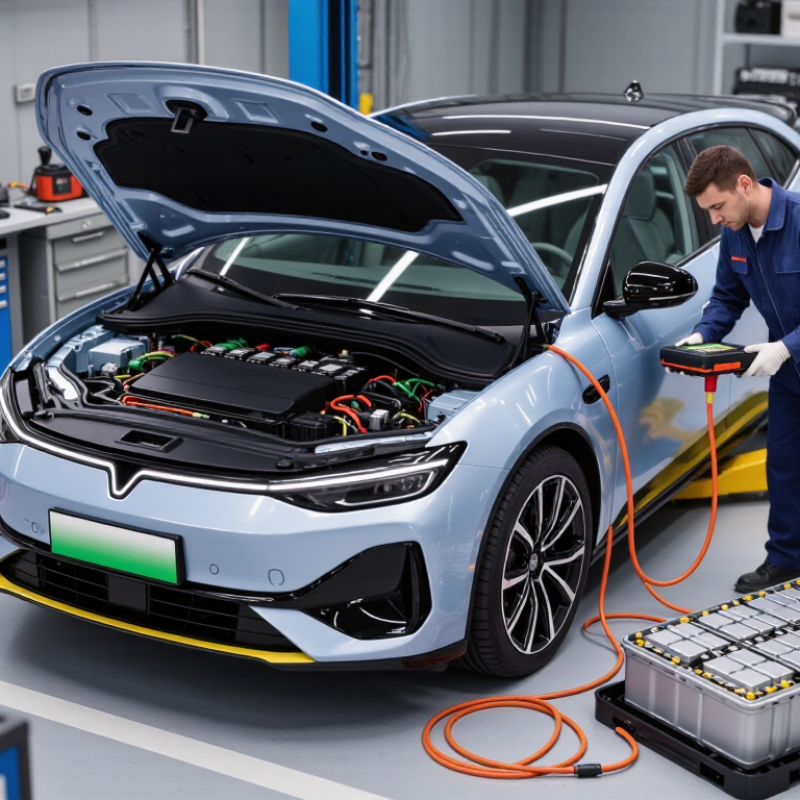
Electric vehicles are not conventional cars with different powertrains. Their diagnostic center has shifted toward energy, software, and communication. The IEA’s Global EV Outlook 2024 recorded over 14 million electric car sales in 2023, representing nearly 18% of global new-car sales. Battery diagnostics are becoming routine, not specialist work.
A technician may inspect a battery pack’s cell-voltage spread, temperature sensors, insulation resistance, and state-of-charge accuracy. A 42-millivolt difference between cells can matter under load. However, a clean scan does not prove a healthy battery. Heat, charging history, and connector resistance can expose problems later. This is where diagnostic judgment still matters. Software codes help, but they rarely explain the entire failure.
Charging systems add another diagnostic layer. The U.S. Department of Energy’s Alternative Fuels Data Center counted more than 168,000 public charging ports nationwide at the end of 2023. Technicians must now examine communication faults, charging curves, ground monitoring, and thermal management. A vehicle may reject charging because of a weak coolant pump, not a failed battery. The process is more precise, yet not always clearer. Procedures also vary between service platforms, creating room for inconsistent decisions.
Top 10 Ways EVs Are Changing Automotive Diagnostics
Battery and powertrain testing now sits at the center of automotive service. The IEA Global EV Outlook 2024 reported nearly 14 million electric car sales in 2023. It also recorded more than 750 GWh of battery demand, a 40% year-on-year increase. More vehicles mean more complex health checks. Technicians must measure cell-voltage differences, insulation resistance, state of charge, and state of health. A scan tool alone cannot confirm battery safety.
Testing begins with controlled procedures. Technicians inspect high-voltage connectors, coolant flow, and battery temperature sensors. They may compare module temperatures during charging and acceleration. Uneven readings can reveal resistance, cooling problems, or early cell imbalance. The U.S. Department of Energy emphasizes repeatable battery testing across temperature and duty-cycle conditions. Real workshop testing should follow that principle. One short road test is rarely enough.
Data rarely behaves neatly. A healthy-looking range estimate can hide reduced capacity. Conversely, cold weather can make a sound battery appear weak. Powertrain tests must also examine inverter output, motor efficiency, regenerative braking, and charging stability. The SAE J1772 charging framework supports consistent connector and communication checks, but field conditions remain messy. Technicians still need experience, documented measurements, and safe isolation procedures. I would not trust a single diagnostic code. A second test often changes the repair decision.
Example battery load-test trace: pack voltage dips as discharge current rises, then recovers as the load eases. EV diagnostics also monitor cell balance, insulation resistance, battery and motor temperatures, inverter operation, and fault codes. Values shown are illustrative for a 400 V-class battery, not vehicle test results.
EV diagnostics now begin with software, not just a mechanic’s ear or a warning light. Battery management systems track cell voltage, temperature, and charging history. A technician can compare readings across a pack and spot an unusually warm module before it causes a breakdown. Small differences matter.
Sensors add a live picture of the vehicle. Wheel-speed, brake, and thermal sensors send measurements to control systems, where software looks for patterns. A brief temperature spike may be harmless; repeated spikes during fast charging deserve closer inspection.
Diagnostic tools can display these readings as timelines, making faults easier to reproduce in the workshop. But a sensor can drift, and a clean dashboard does not prove every component is healthy.
Connected tools may share fault codes and operating data with a service team before the vehicle arrives. That can help prepare the right test equipment and reduce guesswork. Access should still be controlled, and technicians need to confirm software findings with physical checks. Data is helpful, not magic. I have to admit, a graph can look convincing even when its context is missing. Technicians should record driving conditions, recent repairs, and charging habits alongside the readings.
Electric vehicles are turning diagnostics into an electrical safety discipline, not merely a software exercise. The International Energy Agency reported nearly 14 million electric cars sold globally in 2023, representing about 18% of total car sales. That scale changes workshop risk. A scan tool may identify isolation resistance, contactor, pre-charge, or thermal sensor faults. It cannot make a live circuit safe. NHTSA emergency guidance warns that damaged high-voltage systems may retain energy after collisions.
Treat every silent vehicle as energized.
That sounds obvious. It is often missed.
Before testing, trained technicians should secure the vehicle, remove start authorization, and follow the service-disconnect procedure. Establish a controlled work zone. The U.S. Department of Energy describes many traction systems operating between 400 and 800 volts. Technicians need rated gloves, insulated tools, and a properly rated meter. They must verify the absence of voltage using approved procedures.
ISO 6469-3 and SAE J1766 provide useful safety frameworks. Their value is practical: they turn vague caution into repeatable checks.
Never trust a dashboard warning alone. A disconnected 12-volt battery is not enough.
Record fault codes, insulation readings, pack temperature, connector condition, and isolation-test results. Photograph damaged housings before moving them.
If a battery case is crushed, wet, hot, or hissing, stop and isolate the area. Escalate through site emergency procedures. Do not improvise a repair.
The checklist may feel slow, but speed is a poor trade for an invisible electrical hazard. Architecture varies, so technicians must verify procedures instead of relying on memory.
EV diagnostics are shifting maintenance from scheduled part replacement toward condition-based decisions. The International Energy Agency reported nearly 14 million electric cars were sold worldwide in 2023, about 18% of new car sales. More vehicles mean more workshops must interpret battery, inverter, charging, and thermal-management data. A diagnostic scan can reveal a weak cell group or cooling-system fault before a driver notices reduced range. Small clues matter.
The U.S. Department of Energy’s Alternative Fuels Data Center notes that all-electric vehicles generally need less routine maintenance because they have fewer moving parts and no engine oil changes. That does not mean they need little attention. Technicians still inspect tires, brakes, cabin filters, coolant, and high-voltage connections. Diagnostic records help distinguish normal battery-temperature changes from persistent faults, while charging logs can expose repeated interruptions or unusually slow charging. A clear data trail. It can save time, but it is not a verdict: sensor errors, software updates, and driving conditions may distort readings. A careful technician should compare scan results with physical checks, service history, and the driver’s account. Sometimes the data points in the wrong direction. Sources: IEA, Global EV Outlook 2024; U.S. DOE Alternative Fuels Data Center, All-Electric Vehicles.
| No. | Diagnostic Change | Signals or Systems Examined | How It Guides Maintenance and Fault Resolution |
|---|---|---|---|
| 1 | Battery health monitoring | Cell and pack voltages, temperatures, current, state of charge, and estimated state of health. | Battery management system data can help identify abnormal cell variation, temperature patterns, or capacity changes, guiding further testing and service decisions. |
| 2 | High-voltage safety diagnostics | Insulation resistance, isolation-monitor alerts, interlock circuits, and high-voltage system status. | Fault information can help technicians locate possible insulation or connection problems. High-voltage inspection and repair require appropriate training and safety procedures. |
| 3 | Thermal-management analysis | Coolant temperatures, pump and valve operation, fan activity, and temperature differences across components. | Diagnostic readings help distinguish cooling-system issues from battery or power-electronics faults and can direct checks of coolant flow, sensors, and thermal-control components. |
| 4 | Power-electronics fault tracing | Inverter, motor, and DC-DC converter fault codes; electrical measurements; and operating temperatures. | System-specific codes and live data help narrow the investigation to the affected circuit or component before parts are replaced. |
| 5 | Charging-system diagnostics | AC or DC charging status, charge-port signals, voltage and current readings, and communication or fault messages. | Comparing vehicle-side data with the reported charging conditions can help separate a vehicle fault from a supply, connector, or charging-equipment issue. |
| 6 | Regenerative-braking checks | Brake-pedal inputs, wheel-speed signals, motor torque requests, battery charge limits, and friction-brake system data. | These signals help investigate reduced regenerative braking, warning messages, or inconsistent deceleration while checking the interaction between electric and friction braking. |
| 7 | Connected fault data | Time-stamped diagnostic trouble codes, vehicle operating conditions, and available remote health or event reports. | When supported and authorized, relevant data can help a service team prepare for an inspection and reproduce an intermittent issue more efficiently. |
| 8 | Software and control-module diagnostics | Module software versions, communication faults, configuration data, and applicable update or service information. | Checking module status can help identify software-related concerns and determine whether an approved update or a hardware investigation is appropriate. |
| 9 | Predictive, condition-based service | Trends in temperatures, charging behavior, fault frequency, and other available vehicle-health indicators. | Repeated or worsening patterns can prompt inspection before a fault becomes more disruptive. Estimates are diagnostic aids, not a substitute for testing or scheduled service. |
| 10 | A different routine-maintenance profile | Brake wear and operation, tires, suspension, cabin filters, coolant systems, and other vehicle-specific service items. | Because EVs do not use engine oil or combustion-engine components, diagnostic attention shifts toward electric-drive and high-voltage systems, while tires, brakes, and other applicable items still need inspection. |
It can reveal cell imbalance, reduced capacity, or cooling problems before drivers notice shorter range. A single scan is not enough.
They inspect high-voltage connectors, coolant flow, temperature sensors, and differences between battery module readings. Safety comes first.
Yes. Cold temperatures can lower available range and affect test results. Technicians should consider weather and driving conditions.
Tests can cover the inverter, motor, regenerative braking, and charging stability. One fault code rarely tells the whole story.
Temperature, brake, and wheel-speed sensors provide live readings. Repeated heat spikes during charging deserve closer inspection.
It may help technicians prepare equipment and narrow possible causes. But sensor readings need physical checks and context.
Yes. Technicians still check tires, brakes, cabin filters, coolant, and high-voltage connections, even with fewer moving parts.
Charging logs and service history can reveal repeated interruptions or slow charging. Still, software updates and sensor errors can mislead. I’d double-check.
Electric vehicles are changing automotive diagnostics by shifting attention from traditional engines and mechanical parts to batteries, electric motors, power electronics, and complex control systems. Technicians increasingly use specialized tests to assess battery condition, power delivery, and thermal performance, while software updates, onboard sensors, and connected diagnostic tools help identify faults and monitor vehicle systems. In this way, how are electric vehicles changing automotive diagnostics is answered not only by new equipment, but also by the growing role of software and real-time data in understanding vehicle health.
These changes also make safe inspection practices essential, particularly when working around high-voltage components. Clear procedures and appropriate training help technicians assess systems while reducing risks during repair. EV diagnostics can support more informed maintenance by detecting developing issues, guiding fault resolution, and helping distinguish between electrical, software-related, and mechanical problems. As electric vehicles continue to evolve, diagnostic work is becoming more data-driven, specialized, and focused on the integrated operation of the entire vehicle.
Kore Auto