What Is Remote Vehicle Diagnostics and How Does It Work?

Time:2026-09-24 Author:Liam
0%

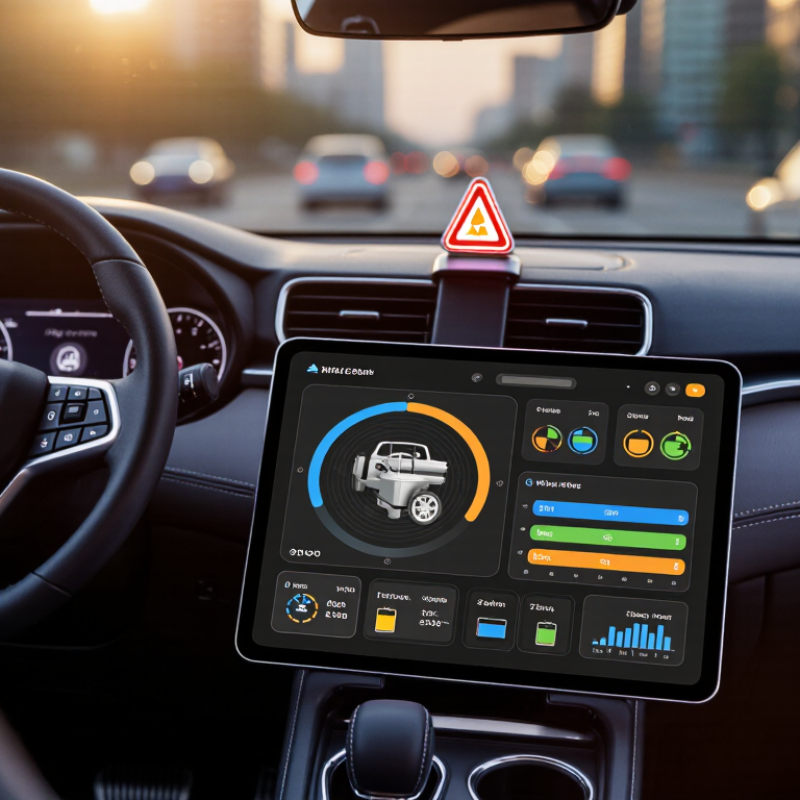
A warning light appears on the dashboard during a busy morning commute. Instead of waiting for a workshop visit, a connected vehicle may send diagnostic information to a technician remotely. That small exchange can help identify a fault, prioritize repairs, or determine whether the vehicle should be inspected in person. It is useful, but it is not magic.

The question “how does remote vehicle diagnostics work” starts with data. Sensors and onboard systems monitor vehicle conditions, while a telematics unit or paired device transmits selected information through a mobile network. Diagnostic trouble codes, battery status, and engine data may then be reviewed using specialized software. Access and available functions vary by vehicle, service provider, and connection quality. Some problems still require physical tests. A screen cannot inspect every worn part.

Industry research shows why dependable vehicle technology matters. J.D. Power’s 2024 U.S. Tech Experience Index Study evaluated 40 advanced technologies and gathered feedback from vehicle owners, highlighting both the promise and usability challenges of in-car systems. Remote diagnostics sits within that broader shift toward connected vehicles. It can give drivers and service teams earlier clues, but a code is not always a complete diagnosis. That distinction deserves attention. In this guide, we explain the data path, the tools involved, common use cases, and the limits drivers should understand before relying on a remote assessment.
What Is Remote Vehicle Diagnostics and How Does It Work?

What Remote Vehicle Diagnostics Means: From OBD-II Sensors to Cloud Systems

What Is Remote Vehicle Diagnostics and How Does It Work?

What Remote Vehicle Diagnostics Means: From OBD-II Sensors to Cloud Systems

Remote vehicle diagnostics connects onboard data with cloud-based analysis. The OBD-II port reads information from sensors, control modules, and the vehicle’s CAN bus. It can capture engine temperature, battery voltage, fault codes, fuel pressure, and emissions-related readings. A small telematics device sends selected data through a secure cellular connection. Technicians then review the information through a cloud dashboard.

The process is not magic. A warning light is not a diagnosis. The system compares sensor values with manufacturer-defined operating ranges and historical patterns. For example, a weak battery may show normal voltage while parked but drop sharply during a cold start. That change can reveal a developing fault before the driver notices it.

Berg Insight’s fleet management research reported more than 15 million active connected fleet units in Europe at the end of 2023, showing how widely remote monitoring is being adopted.

Remote diagnostics also supports maintenance planning. S&P Global Mobility reported that the average age of vehicles in the United States reached 12.6 years in 2024. Older vehicles often need more frequent inspection and clearer service records.

However, cloud predictions can be wrong when sensors are damaged, data is incomplete, or software is outdated. Human review still matters. The technician must confirm the physical condition, test the suspected circuit, and question the data when it does not match real driving symptoms.

NHTSA’s 1996 OBD-II Mandate and Its Role in Modern Diagnostics

The 1996 OBD-II requirement changed what a vehicle could report about its own health. For 1996 model-year cars and light trucks in the United States, standardized onboard diagnostics monitored emissions-related systems and stored fault codes. The mandate is often associated with NHTSA, but emissions rules were chiefly administered by the Environmental Protection Agency, building on California’s earlier program. That distinction matters. OBD-II is not a complete vehicle-health record; it focuses mainly on emissions performance.

A technician can connect a scan tool to the diagnostic port and read codes, freeze-frame data, and monitor status. A code points toward a detected condition, not automatically to a failed part. A loose fuel cap, for example, may trigger an evaporative-system warning. Remote diagnostics sends compatible vehicle data to a service platform, allowing an issue to be reviewed before a visit. Useful, but not magic.

The need is growing as vehicles stay on the road longer. S&P Global Mobility reported an average U.S. light-vehicle age of 12.6 years in 2024. Older vehicles can produce more alerts, yet a warning light still needs interpretation. Remote readings may be incomplete, delayed, or affected by sensor faults. A mechanic’s inspection remains important; the data alone can be misleading.

How ECU Data Travels: Telematics, Cellular Networks, and Secure Cloud APIs

Remote vehicle diagnostics begins with data inside the vehicle. Electronic control units monitor systems such as the engine, battery, and brakes. They record measurements and fault codes when readings move outside expected ranges. A telematics device gathers selected data through the vehicle’s communication network. Think of it as a small relay, not a complete view of every component.

The device packages readings with details such as time and vehicle status, then sends them over a cellular network. Coverage matters. A vehicle in a concrete parking garage may store data until a connection returns. Messages can also arrive late, so a dashboard reading is not always a live measurement. That distinction is easy to overlook.

At the cloud, secure APIs receive and organize incoming data for diagnostic software. Encryption helps protect information in transit, while authentication limits which devices and services can exchange it. Access controls and careful data retention matter too. A technician may compare a recurring temperature spike with earlier trips, rather than treating one reading as proof of failure. Remote diagnostics can narrow the search, but sensor faults, incomplete signals, or unusual driving conditions can mislead. The human still has to question the data.

From Fault Codes to Repairs: The Remote Diagnostic Workflow Step by Step

Remote vehicle diagnostics begins when a vehicle sends operating data through a connected diagnostic device or built-in communication system. A technician reviews fault codes, sensor readings, and, when available, a snapshot of conditions recorded when a problem occurred. A code points to a system, not always a failed part. Context matters.

The technician compares the code with live readings, service history, and the driver’s description. For example, a rough idle alongside unusual airflow readings may suggest an intake issue, but it does not prove one. The technician may ask the driver to confirm when the symptom appears or check whether a warning light is still on. Some information arrives late or is incomplete. That part can be frustrating.

Next, the technician explains likely causes and recommends a physical inspection or a specific test. A repair shop might check a connector, measure a circuit, or inspect a hose before replacing anything. After repairs, the vehicle can be scanned again, and relevant readings or codes can be checked. A cleared code alone is not proof of a lasting fix. The symptom should be retested under suitable conditions, with any remaining uncertainty recorded. Remote diagnosis narrows the search; it cannot always replace hands-on testing.

What Is Remote Vehicle Diagnostics and How Does It Work? — From Fault Codes to Repairs: The Remote Diagnostic Workflow Step by Step

Step What Happens Information Used Remote Action Result or Decision Important Limitation
1. Establish a connection The vehicle sends available data through a built-in telematics unit or a connected diagnostic device. Vehicle identification, connection status, odometer reading, and vehicle-system data available to the device. A technician or diagnostic platform confirms that the vehicle is reporting and identifies the systems that can be queried. A diagnostic session can begin, or the owner may be asked to check the device, vehicle power, or network coverage. Data availability depends on vehicle equipment, device compatibility, connectivity, and user permissions.
2. Retrieve fault codes Electronic control units are queried for diagnostic trouble codes (DTCs). Stored, pending, or permanent DTCs; reporting control unit; and, when available, code status. The technician records the codes and identifies the systems or conditions associated with them. A list of fault indicators is created for further investigation. A DTC points to a detected condition or circuit; by itself, it does not prove which component has failed.
3. Review supporting data Relevant vehicle data is examined to understand when and under what conditions a code appeared. Freeze-frame data, live sensor readings, code history, warning-light status, and driver-reported symptoms, when available. The technician compares readings with expected operating conditions and looks for related codes or patterns. The likely diagnostic direction is narrowed, and additional checks may be requested. Remote readings can be incomplete or intermittent; some checks require the vehicle to be running or physically inspected.
4. Assess safety and urgency The reported symptoms and available data are screened for potential safety concerns. Warning lights, drivability symptoms, temperature or pressure alerts, and any loss of braking, steering, or engine power reported by the driver. The technician provides general guidance on whether to stop driving, arrange recovery, or proceed cautiously to an inspection location. The next step is selected based on risk: stop and seek assistance, schedule an inspection, or continue with monitoring as advised. Remote assessment cannot verify the vehicle's physical condition; urgent symptoms should not be disregarded because a remote scan appears normal.
5. Build a test plan The fault codes and supporting evidence are translated into a practical diagnostic plan. Vehicle-specific service information, wiring diagrams, code definitions, technical procedures, and scan results. The technician specifies checks such as inspecting a connector, measuring voltage, checking a fuse, or confirming a fluid level. The owner or an on-site technician can perform targeted checks instead of replacing parts based only on a code. Some tests require specialized tools, safe access, or an in-person technician and cannot be completed remotely.
6. Verify the cause Recommended checks are completed and their results are compared with the initial diagnosis. Inspection findings, measurements, additional scan data, and whether the original symptom can be reproduced. The remote specialist reviews the evidence and updates the diagnosis or recommends further testing. A likely cause is confirmed, ruled out, or narrowed sufficiently to plan a repair. Replacing a part without confirming the cause can leave the fault unresolved or create unnecessary expense.
7. Plan and perform the repair A repair is arranged based on the verified fault and the vehicle's condition. Confirmed test results, required parts, labor needs, and any safety or service-procedure requirements. The technician explains the proposed work; the repair is completed at an appropriate service location. The suspected cause is addressed, and any required programming or calibration is identified. Remote diagnostics can guide repair planning but cannot physically repair the vehicle or guarantee a diagnosis without adequate evidence.
8. Clear and validate After repair, the system is rescanned and the vehicle is checked for returning faults and symptoms. Post-repair DTC status, warning lights, relevant live data, and a road test or operating check when appropriate. The technician confirms whether the repair resolved the reported issue and advises on any remaining checks. The repair is documented as verified, or further diagnosis is recommended if the fault returns. Some monitors need specific driving conditions to complete; a recently cleared code may not immediately indicate that the underlying issue is fixed.

How to read the workflow: Remote vehicle diagnostics combines electronic scan data with symptom reports and, when needed, hands-on testing. Fault codes are useful clues, but a confirmed repair should be based on appropriate verification.

McKinsey’s $250–$400 Billion Connected-Car Data Forecast by 2030

Remote vehicle diagnostics turns a car’s onboard sensors into an early-warning system. It can send fault codes, battery readings, and temperature alerts to a service team before a driver reaches the workshop. A weak battery may appear as a voltage drop after a cold night. That detail can help prioritize a check, though it does not prove the battery is failing.

The market stakes are substantial. McKinsey’s connected-car analysis estimates that data-enabled services could create $250–$400 billion in annual value by 2030. That figure describes potential value across connected-car services, not guaranteed revenue from diagnostics alone. The distinction matters. Remote monitoring may reduce unnecessary inspections and help schedule repairs, but poor data quality or missed signals can still lead to wrong decisions.

There is more to the estimate than repair savings. Vehicle data may support predictive maintenance, fleet uptime, and tailored services, provided drivers understand what is collected and why. The International Energy Agency’s Global EV Outlook 2024 notes that electric-car sales exceeded 17 million in 2024, increasing the relevance of monitoring batteries and charging systems. Yet forecasts remain forecasts. A dashboard warning is useful; a mechanic’s inspection may still be needed.

What Is Remote Vehicle Diagnostics and How Does It Work?

Remote vehicle diagnostics uses connected-vehicle data—such as fault codes, sensor readings, battery status, and mileage—to identify potential issues without requiring an immediate physical inspection. The estimated global value of connected-car data by 2030 is commonly expressed as a range of approximately $250 billion to $400 billion.

Source: McKinsey estimate referenced in the article title. Values represent an estimated 2030 range, not reported company revenue.

FAQS

What does remote vehicle diagnosis do?

It sends fault codes and sensor readings to a technician. These details help narrow the search.

Does a fault code identify the failed part?

Not always. A code points to a system, not necessarily a specific broken component.

What information may a technician review?

They may compare live readings, service history, and the driver’s description. A snapshot from when the issue occurred can also help.

Can sensor readings prove a likely cause?

No. Unusual airflow readings and a rough idle may suggest an intake problem, but testing is still needed.

What happens when remote data is incomplete?

The technician may ask when symptoms appear or whether a warning light remains on. Sometimes details arrive late. Frustrating, but relevant.

Why might a repair shop inspect the vehicle in person?

A technician may check a connector, measure a circuit, or inspect a hose before replacing parts.

Does clearing a fault code confirm that a repair worked?

No. The vehicle should be rescanned, and the symptom should be retested under suitable conditions.

What value could connected-car services create by 2030?

One analysis estimates $250–$400 billion in annual value across connected-car services. That is potential value, not guaranteed diagnostic revenue.

Why is remote monitoring relevant to electric cars?

It can help monitor batteries and charging systems. But a dashboard warning may still need a mechanic’s inspection.

Conclusion

Remote vehicle diagnostics uses a vehicle’s onboard sensors and electronic control units to monitor performance and identify potential problems. Since the 1996 OBD-II mandate helped standardize access to diagnostic information, vehicles can report fault codes and operating data through compatible systems. To understand how does remote vehicle diagnostics work, consider the journey from the vehicle to a technician: a telematics device collects selected ECU data, sends it over a cellular connection, and delivers it to secure cloud services through protected APIs.

The system organizes the data into alerts and diagnostic insights, helping technicians assess a fault, recommend next steps, and plan a repair—often before the vehicle reaches a workshop. This process can reduce guesswork and support more timely maintenance, while secure data handling helps protect information in transit and storage. As connected vehicles generate more information, forecasts of substantial economic value from connected-car data by 2030 point to growing opportunities for diagnostics, maintenance planning, and vehicle services.

Liam

Liam

Liam is a dedicated marketing professional with a profound expertise in the industry, where he excels at highlighting the unique advantages of our core products. With a keen understanding of market trends and consumer needs, Liam frequently updates our company’s professional blog, providing......