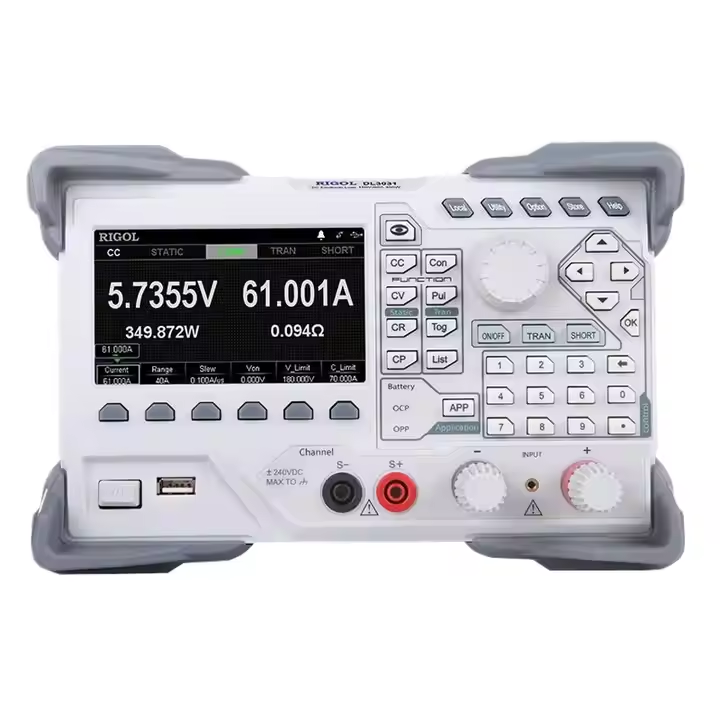
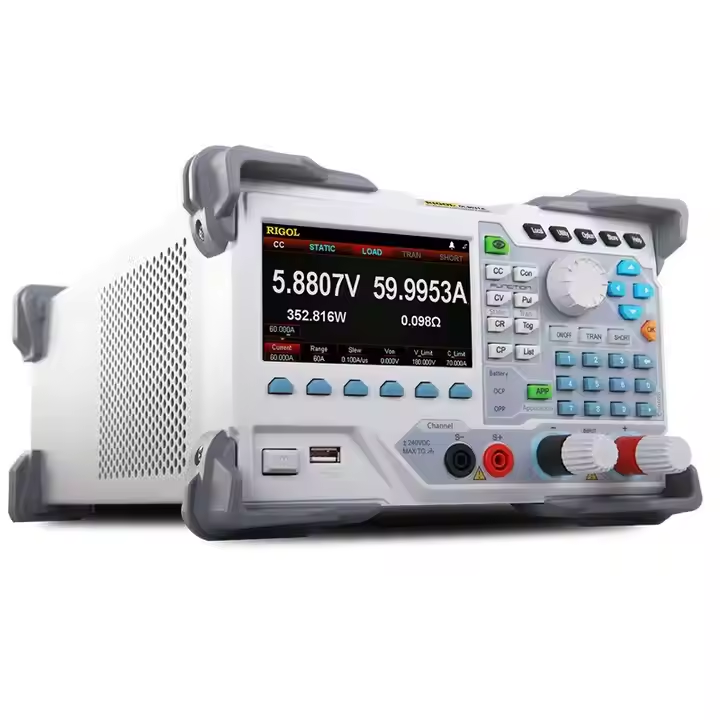
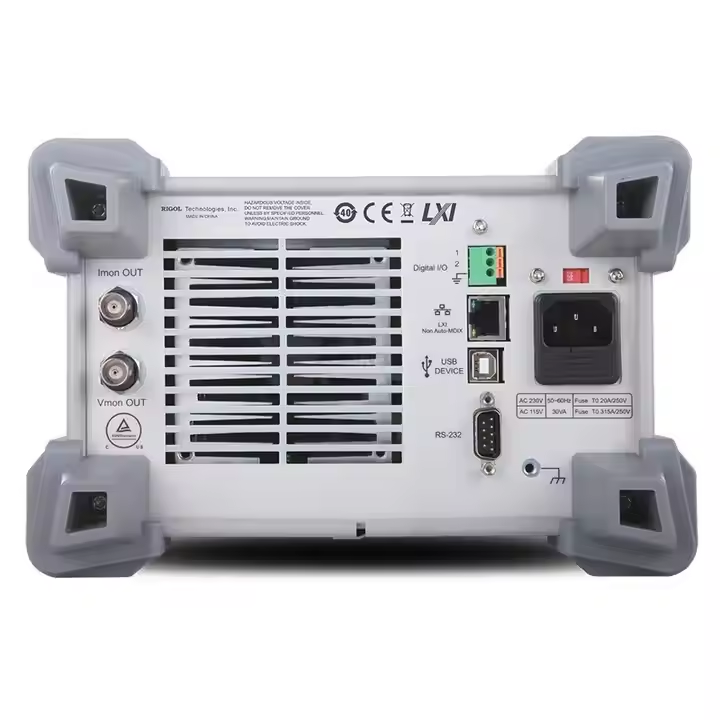
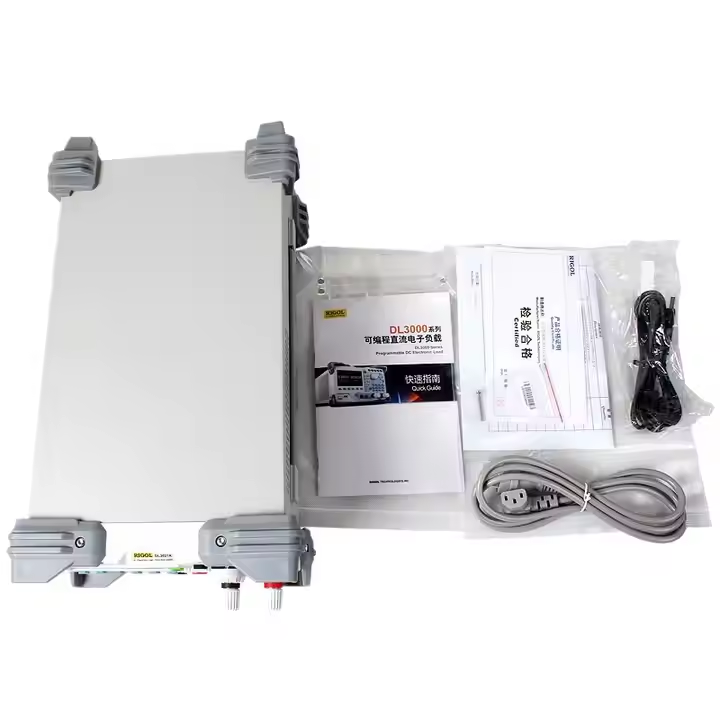
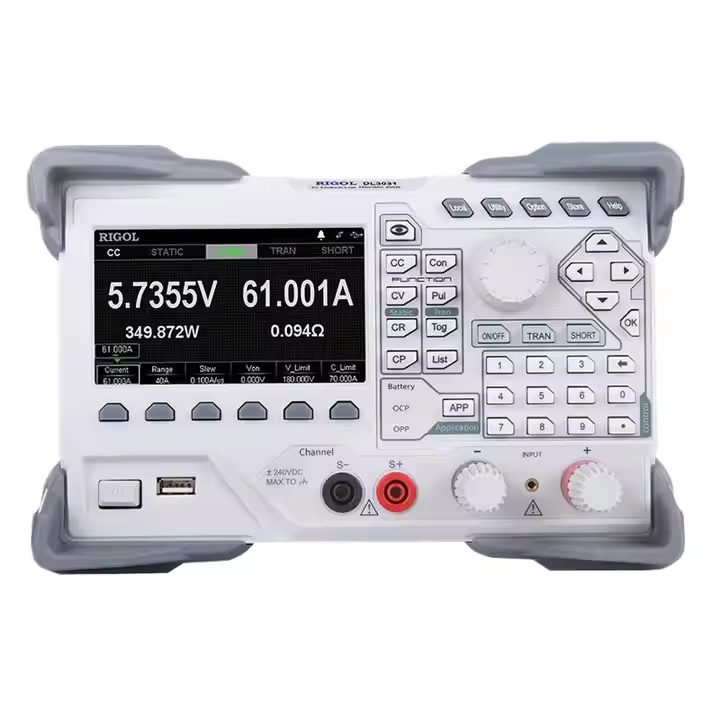
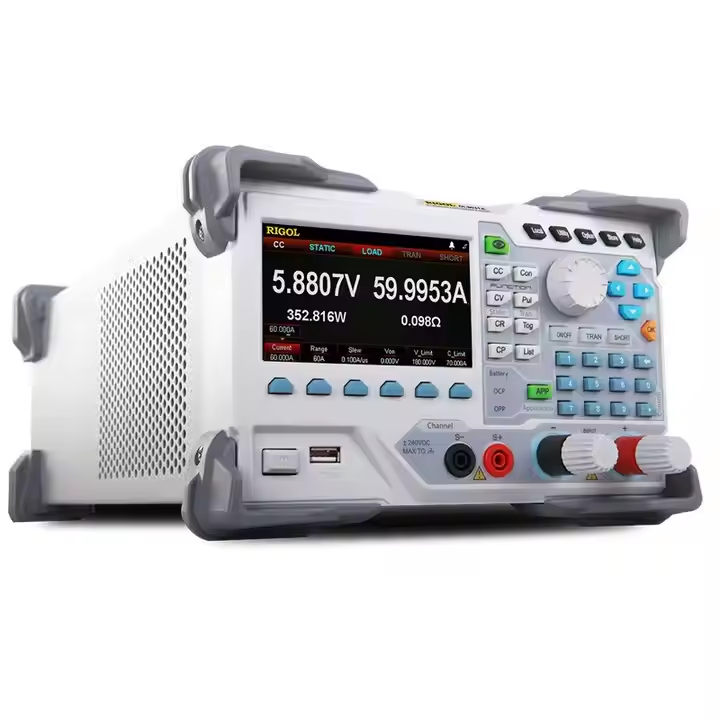
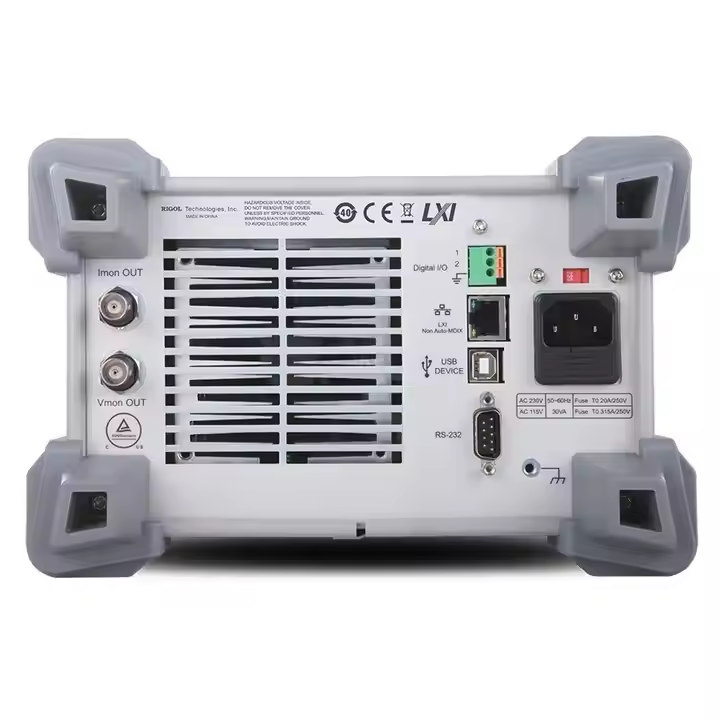
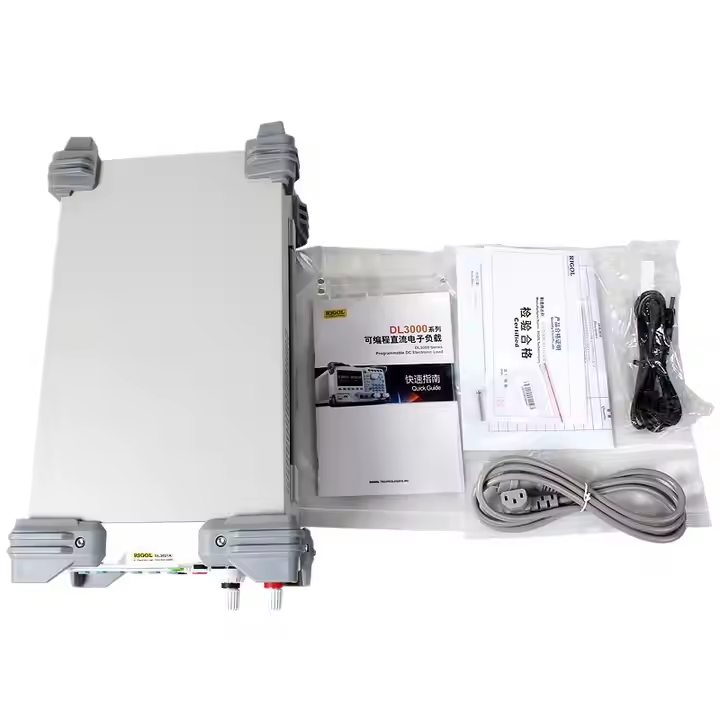
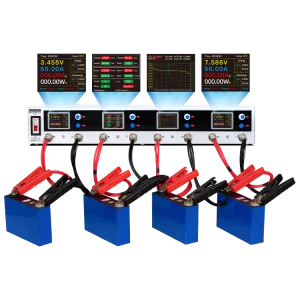
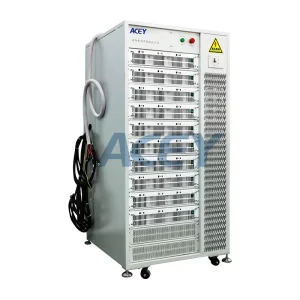
Programmable DC Electronic Load DL3000 Series: DL3000 is a cost-effective programmable DC electronic load with high performance. With a user-friendly interface and superb performance specifications, DL3000 series provides various interfaces for remote communication to meet your diversified test requirements. It can be widely used in various industries, such as automotive electronics, aerospace, and fuel cells.
Key Features:
Single output, 150 V/40 A/30 kHz, total power up to 200 W
Dynamic mode: up to 30 kHz
Adjustable current rising speed: 0.001 A/μs to 5 A/μs
Min. readback resolution: 0.1 mV,0.1 mA
4.3-inch TFT LCD, capable of displaying multiple parameters and states simultaneously
Over-voltage/over-current/overpower/over-temperature/reverse voltage protection
4 static modes: CC, CV, CR, CP
3 dynamic modes: continuous, pulsed, toggled
List function supports editing as many as 512 steps
Battery test function, OCP test, OPP test, factory test function, etc.
Short-circuit test function
Power-off memory function
Built-in RS232/USB/LAN communication interface
USB-GPIB module (optional)
Frequently Asked Questions
What is the measurement range of the DL3021 DC Electronic Load?
The DL3021 model supports a voltage range of 0V to 150V, current up to 60A, and power capacities of 200W or 350W.
What operating modes are available on the DL3000 series?
It supports 4 static modes: Constant Current (CC), Constant Voltage (CV), Constant Resistance (CR), and Constant Power (CP), along with 3 dynamic modes: continuous, pulsed, and toggled.
Does the device offer safety protection features?
Yes, the system has built-in protection mechanisms for over-voltage, over-current, overpower, over-temperature, and reverse voltage to ensure safe operation.
What communication interfaces are supported?
The DL3000 series comes standard with RS232, USB, and LAN interfaces. Additionally, a USB-GPIB module is available as an option.
Can I use this electronic load for battery testing?
Yes, the device features dedicated battery testing functions, along with OCP (Over-Current Protection) tests, OPP (Over-Power Protection) tests, and short-circuit testing capabilities.
 Kore Auto